Tillandsia
Tillandsia usneoides€10.00

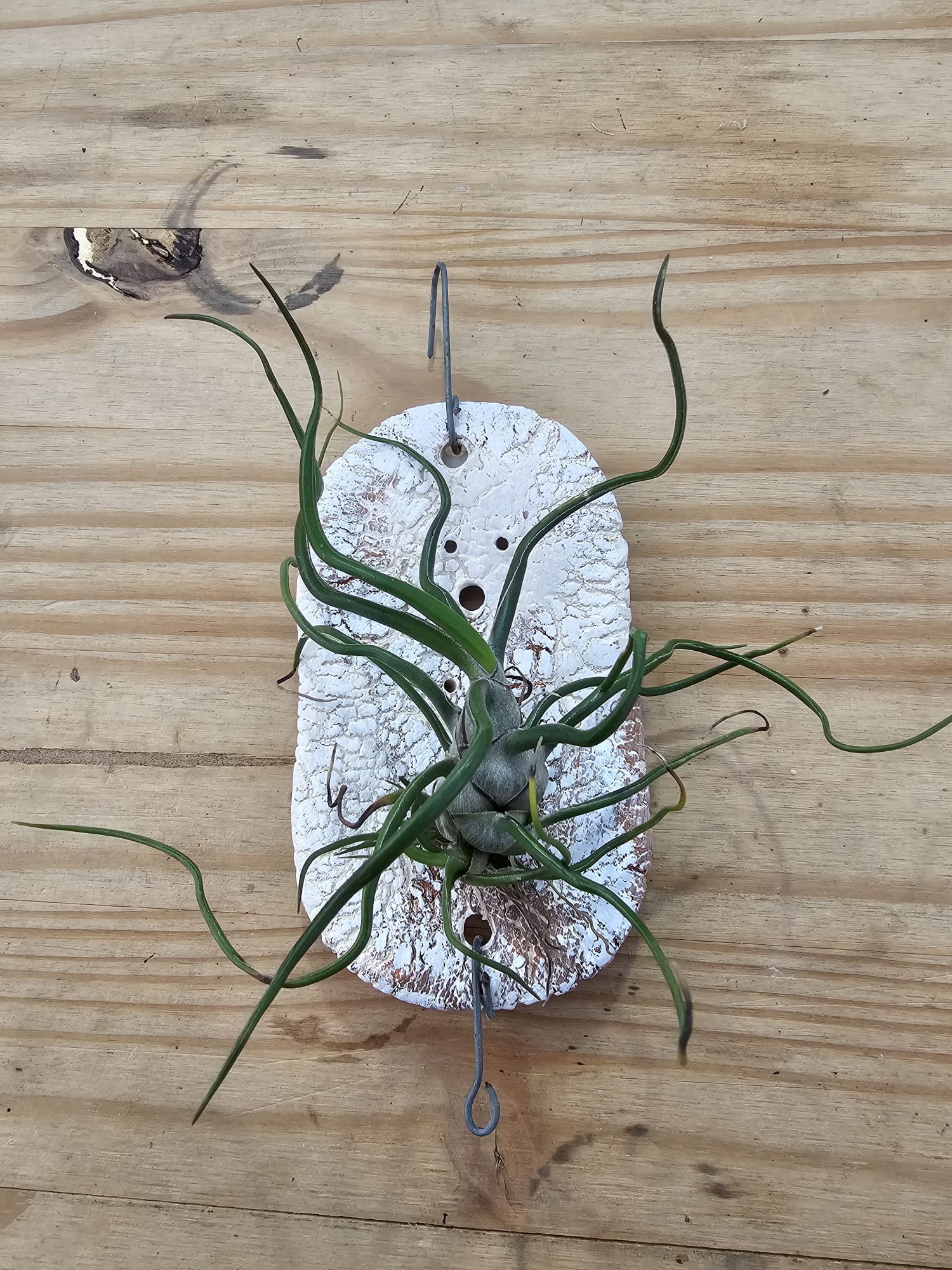
The Tillandsia bulbosa is one of the most extraordinary and recognisable species in the entire Tillandsia genus, belonging to the Bromeliaceae family. Native to the tropical forests of Central America, South America and the Caribbean, this epiphytic plant immediately catches the eye with its unique morphology, which is reminiscent of a sea creature or a small exotic octopus. The base of the Tillandsia bulbosa forms a hollow, round, smooth pseudobulb, from which twisted, narrow, tentacle-like leaves emerge in a deep dark green, sometimes adorned with purple and greyish tones.
As a strictly airborne (epiphytic) plant, the Tillandsia bulbosa does not need to be, and should not be, planted in substrate or soil. In nature, it grows attached to tree trunks and branches, absorbing the moisture and nutrients it needs directly from the atmosphere through tiny specialised structures on its leaves, called trichomes. Growing the Tillandsia bulbosa in your home or greenhouse in Portugal means having the opportunity to enjoy a living work of art that requires little maintenance, perfect for modern decorative arrangements, open terrariums or mounts on cork bark and treated wood.
Although it is an extremely hardy and long-lasting species, the Tillandsia bulbosa needs some specific care regarding light and air circulation in order to grow vigorously and to avoid excess water building up in its hollow base. Below are the key steps to keep your plant healthy.
The Tillandsia bulbosa likes very bright places, but with indirect or filtered light. As a species with predominantly green, soft leaves (belonging to the group of humid-climate tillandsias), it tolerates direct sun less well than the very silvery species. Avoid exposure to strong midday sun in summer so as not to scorch the leaf tips. A window facing east or west, or a balcony sheltered under light shade, is the ideal spot.
Because it is a species with a hollow pseudobulb, the watering method needs extra attention. Mist the Tillandsia bulbosa with soft water (preferably rainwater or demineralised water) about 2 to 3 times a week on hot days. You can also water it by fully submerging the plant in water for 15 to 20 minutes, once a week. Critical step: After soaking or heavy misting, gently shake the plant upside down to remove all the excess water collected inside the pseudobulb. Standing water in the base is the main cause of bulb rot.
Air circulation is as vital to the Tillandsia bulbosa as water itself. The plant should dry completely within 3 to 4 hours after watering. Make sure you place your plant in a well-ventilated space and avoid enclosing it in completely airtight containers with no airflow.
As a species native to tropical regions, it prefers temperatures between 18°C and 28°C. The Tillandsia bulbosa tolerates slight fluctuations, but it must be protected from frost and from temperatures below 10°C during the winter months in Portugal, and it is advisable to bring it indoors or into a heated greenhouse.
Although air plants can survive on just water and light, regular feeding speeds up growth, strengthens the structure of the pseudobulb and encourages the appearance of pups (offsets) and spectacular flower spikes. We recommend applying fertiliser diluted in the misting water every 15 to 30 days.
During the active vegetative growth phase in spring, mist the plant using the diluted fertiliser Orchid Focus Grow. When you notice that the plant is preparing to move into the pre-flowering phase, or at the start of summer, switch to Orchid Focus Bloom to intensify the vividness of the bract colours and promote longer-lasting violet flowers.
Explore our complete, specialised selection in the fertilisers and nutrition for exotic plants section. To deepen your botanical and taxonomic knowledge of the Bromeliaceae family, consult the records and guides of the Royal Horticultural Society (RHS).
Add the Tillandsia bulbosa to your collection today and transform your home décor with the incomparable elegance of an exotic air plant!

News from our greenhouse in Fernão Ferro, for people who grow with passion.
By subscribing, you accept our Privacy policy. You can unsubscribe at any time.