Bulbophyllum
Bulbophyllum rothschildianum€20.00€25.00

 −17%
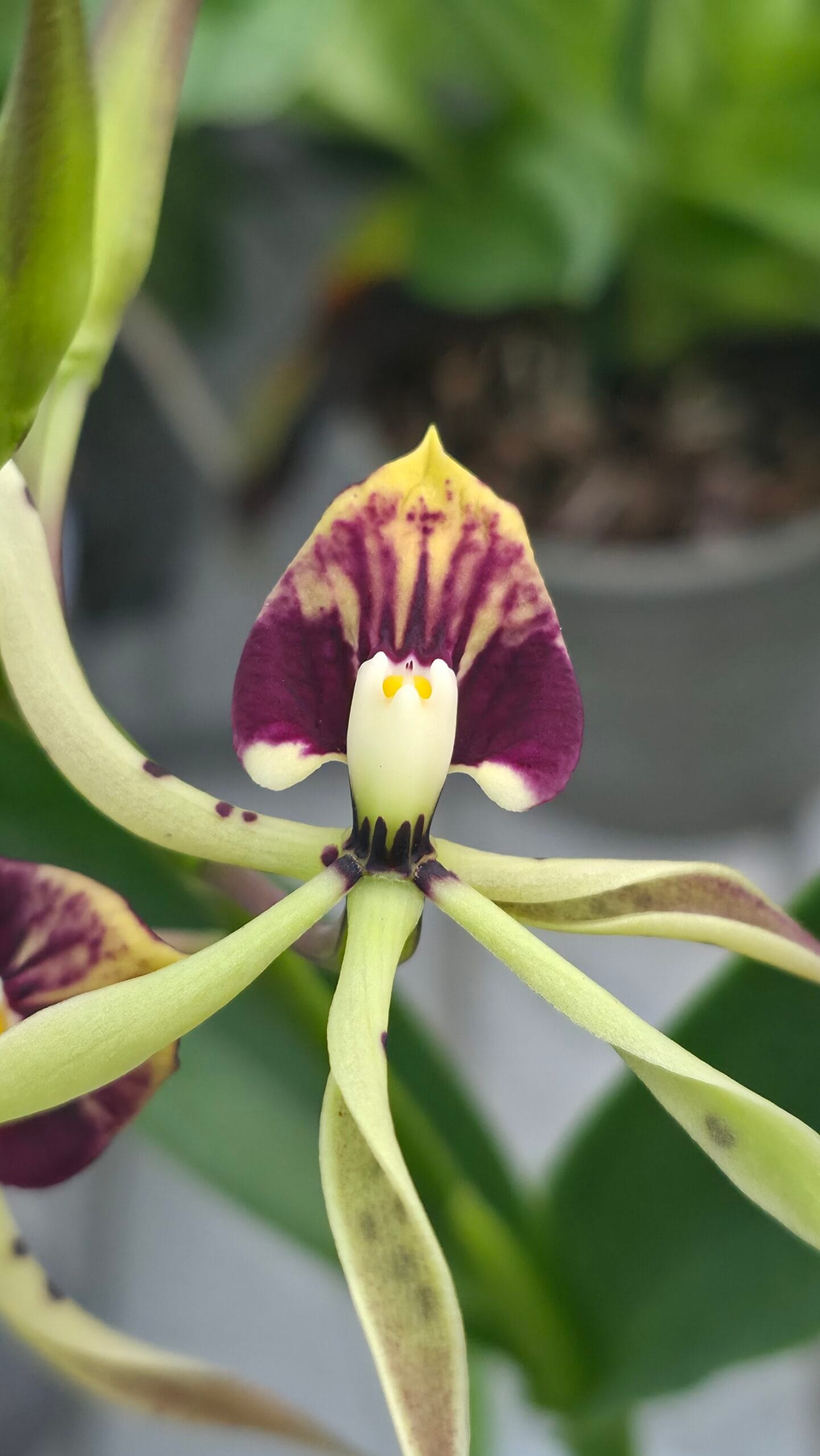
The Prosthechea cochleata stands out as one of the most curious and recognisable orchids in the botanical world. Popularly known as "Octopus Orchid" or "Cockleshell", this species native to the Americas charms with its inverted form and almost continuous flowering. In this way, it is the ideal choice for collectors seeking an exotic, resilient plant that keeps the orchid house always in bloom.
Inverted Flowers (Non-Resupinate): 🔄 Unlike most orchids, its flowers have the labellum facing upwards. The thin, hanging petals and sepals resemble tentacles, which justifies the nickname "octopus".
Contrasting Colouring: 🎨 The labellum has a deep purple, almost black tone with radiating stripes, while the petals and sepals display a refreshing lime green. Consequently, the visual contrast is dramatic and very attractive.
Successive Flowering: ⏳ This species has the remarkable ability to bloom for months. The flowers open one after another on the same flower spike. Therefore, you will have a plant with flowers for much of the year.
Epiphytic Growth Habit: 🌳 It develops teardrop- or pear-shaped pseudobulbs, which store water and nutrients. In addition, the leaves are green, lanceolate and give the plant a vigorous appearance.
Growing this orchid is considered easy to moderate, making it a very rewarding plant thanks to its robustness.
Light: ☀️ This orchid prefers bright to moderate indirect light. However, avoid direct sun during the hottest hours, as it can scorch the foliage. It adapts well to brightly lit windows or 50% to 70% shade cloth.
Temperature: 🌡️ It enjoys intermediate to warm climates. It tolerates temperatures between 15ºC and 30ºC. In this way, it adapts easily to a variety of domestic settings and greenhouses.
Humidity: 💧 Moderate humidity (between 50% and 70%) is ideal. In addition, ensure good air circulation, especially if humidity is high, to prevent leaf diseases.
Watering: 🚿 Water regularly, but allow the substrate to dry almost completely between waterings. The pseudobulbs indicate the plant's health: if they are very wrinkled, the plant needs more hydration.
Substrate: 🪴 Use a mix that offers excellent drainage. A combination of medium-grade pine bark, charcoal and a little sphagnum moss works very well to maintain humidity without waterlogging.
Flower Spikes: ✂️ Do not cut the flower spike while it is still green, as new flowers will keep emerging from the tip. Cut only once the spike has dried out completely after successive flowering has finished.
Fertilising: 🧪 Apply a balanced fertiliser (NPK 4-4-4) fortnightly during the period of active growth. However, halve the dose to avoid salt build-up in the substrate.
Ventilation: 🌬️ Like all epiphytes, it loves fresh air. Therefore, avoid stuffy locations where stagnant air may encourage fungi or mealybugs.
With its intriguing shape and long-lasting flowers, the Prosthechea cochleata will bring a touch of marine mystery and tropical elegance to your collection.
News from our greenhouse in Fernão Ferro, for people who grow with passion.
By subscribing, you accept our Privacy policy. You can unsubscribe at any time.