Sale
Dendrobium
White Dendrobium Nobile€10.00€17.50
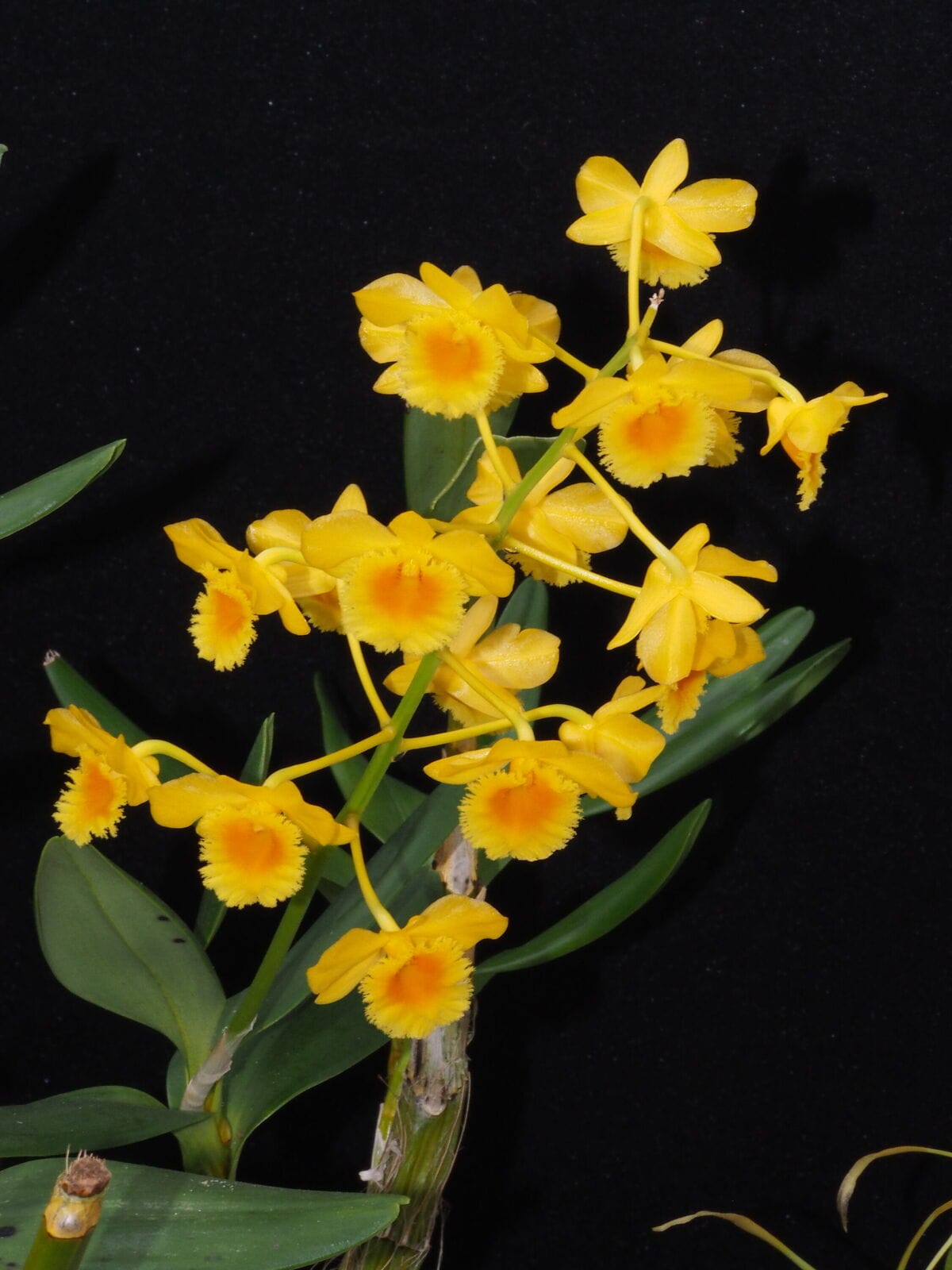
The Dendrobium chrysotoxum is one of the most stunning and highly prized botanical species in the entire Dendrobium genus. Native to South-East Asia, including parts of India, Thailand, Myanmar, Vietnam and southern China, this epiphytic orchid grows in tropical mountain forests and in areas with well-defined seasons. The Dendrobium chrysotoxum stands out for its spectacular flowering, with pendulous clusters of dozens of flowers in a vibrant golden-yellow, with a fringed, orange-toned lip, accompanied by an intense fragrance reminiscent of honey and lemon balm.
With spindle-shaped, upright and deeply grooved pseudobulbs (resembling thick, sturdy canes), the Dendrobium chrysotoxum keeps its leathery leaves at the top for several years. In spring, the plant surprises by producing arching flower spikes from the upper nodes of the pseudobulbs. Having a Dendrobium chrysotoxum in your collection means enjoying a true spectacle of colour and scent in spring, perfect for anyone looking for an exotic, hardy orchid of great ornamental value.
Success in growing Dendrobium chrysotoxum depends on respecting its natural growth cycle in spring/summer and its dry resting period in winter.
The Dendrobium chrysotoxum requires very high light levels to flower abundantly. It needs strong indirect sunlight and benefits greatly from direct sun in the early morning or late afternoon. If the light is insufficient, the plant will keep producing leaves but will not produce flower spikes the following spring.
This species adapts very well to a warm to temperate climate. During the growing period (spring and summer), it enjoys temperatures between 20°C and 32°C. In winter, it tolerates and benefits from a drop in night-time temperatures (between 10°C and 14°C), as this temperature range, combined with reduced watering, is the key trigger for inducing flowering.
In spring and summer, when new roots and new growths are developing actively, water generously and keep the moisture level steady. However, in late autumn and throughout the winter, the Dendrobium chrysotoxum enters a resting period. During this time, reduce watering drastically, allowing the substrate to dry out completely between waterings. Water only as much as is strictly necessary to prevent the pseudobulbs from becoming excessively wrinkled.
As its roots need maximum aeration and quick drying, the Dendrobium chrysotoxum thrives when mounted on cork slabs or solid wood. For pot cultivation, choose clay pots or wooden baskets with a mix of medium to coarse pine bark and perlite, ensuring perfect drainage with no water build-up.
To encourage the development of strong new growths, apply Orchid Focus Grow fertiliser fortnightly throughout the active growth phase in spring and early summer.
From mid-summer and throughout autumn, switch to Orchid Focus Bloom fertiliser. This phosphorus- and potassium-rich feed helps the new pseudobulbs to mature and prepares the plant for the formation of flower buds. During the winter rest period, stop feeding completely.
Explore our full range of specialist nutrition in the orchid fertilisers category. If you would like to consult the taxonomic records and official geographical distribution of the Dendrobium genus, visit Plants of the World Online (Kew Science).
Add the Dendrobium chrysotoxum to your basket now and bring the energy of gold and honey to your orchid collection!
Sale
 Sale
News from our greenhouse in Fernão Ferro, for people who grow with passion.
By subscribing, you accept our Privacy policy. You can unsubscribe at any time.