Description
🪂 Stanhopea oculata: The Parachute Orchid with a Surprising Aroma ✨
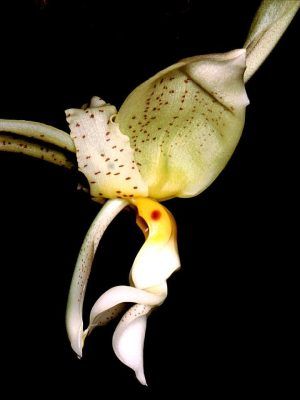
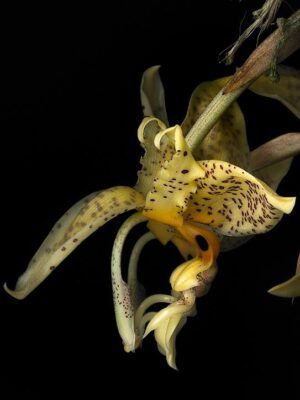
Stanhopea oculata stands out as one of the most exotic, dramatic, and intriguing species in the entire orchid kingdom. Popularly known as the “parachute orchid” due to the unique shape of its hanging flowers, this botanical species enchants collectors with its natural engineering. In this way, it becomes a must-have piece for anyone wanting a unique visual and sensory spectacle in their orchid house.
Key Features
-
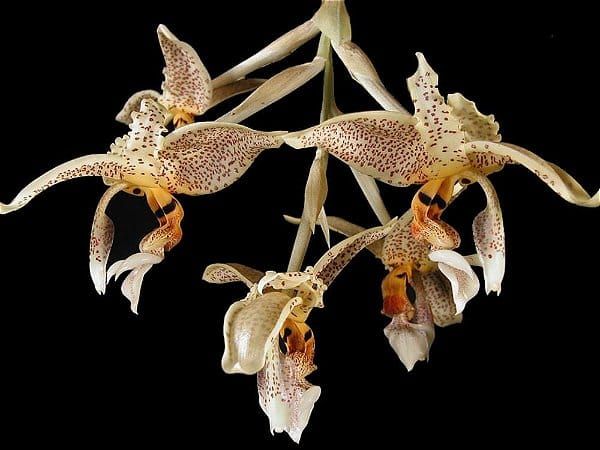
Inverted Blooming: 🔄 Unlike most orchids, the flower spikes of Stanhopea grow downwards, breaking through the bottom of the pot. Consequently, its large, waxy flowers appear suspended in the air, resembling small, ornate parachutes.
-
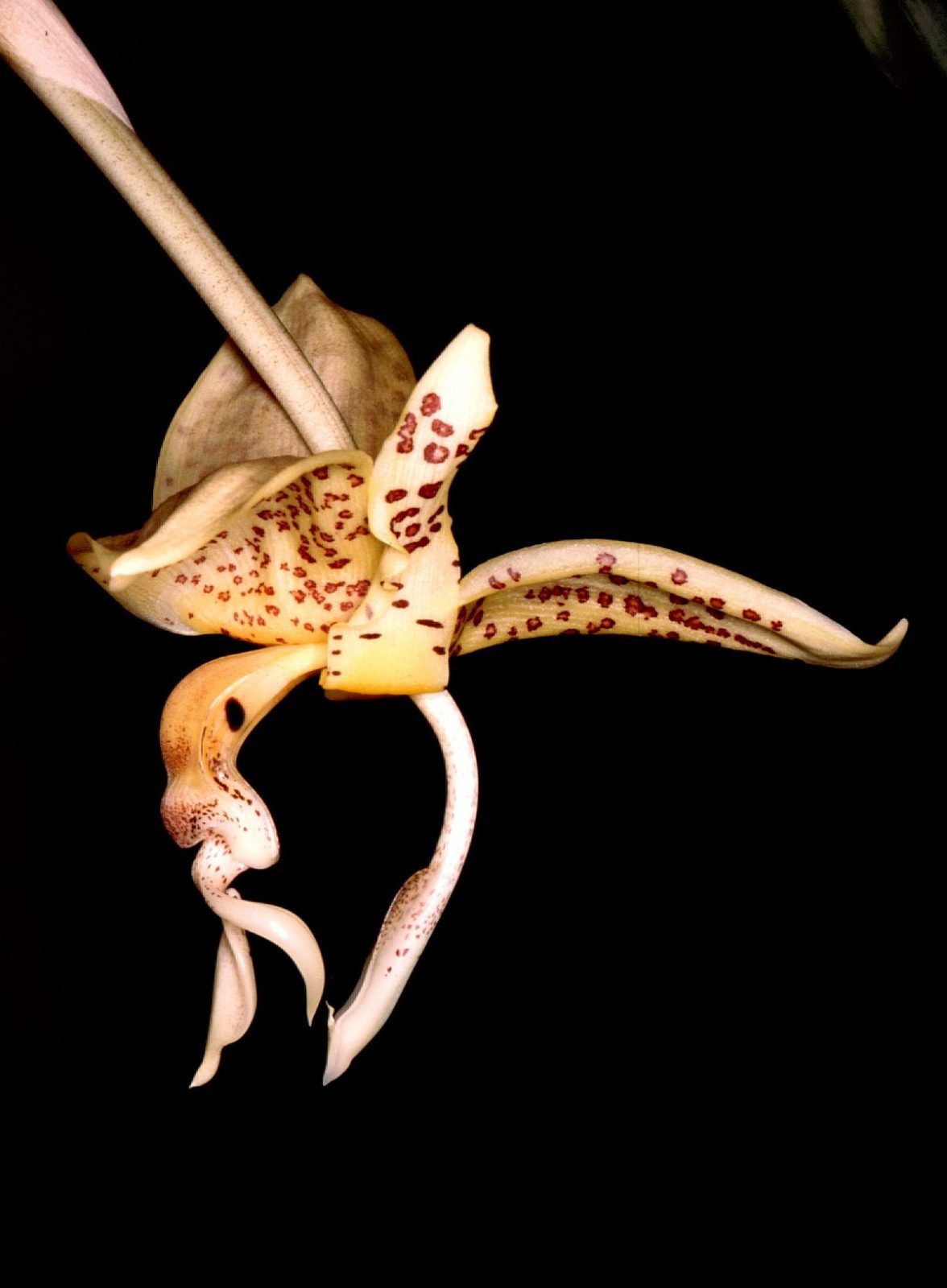
Distinctive Eyes: 👁️ The term “oculata” refers to the two circular dark spots located at the base of the lip, which look like mysterious “eyes.” The petals display a yellow-cream or ivory coloration, speckled with numerous purple dots.
-
Inebriating Perfume: 🍫 In addition to the visual impact, the flowers exhale an extremely intense and complex sweet fragrance, reminiscent of notes of vanilla, chocolate, or mint. Therefore, its presence scents the entire surrounding environment during the early hours of the morning.
-
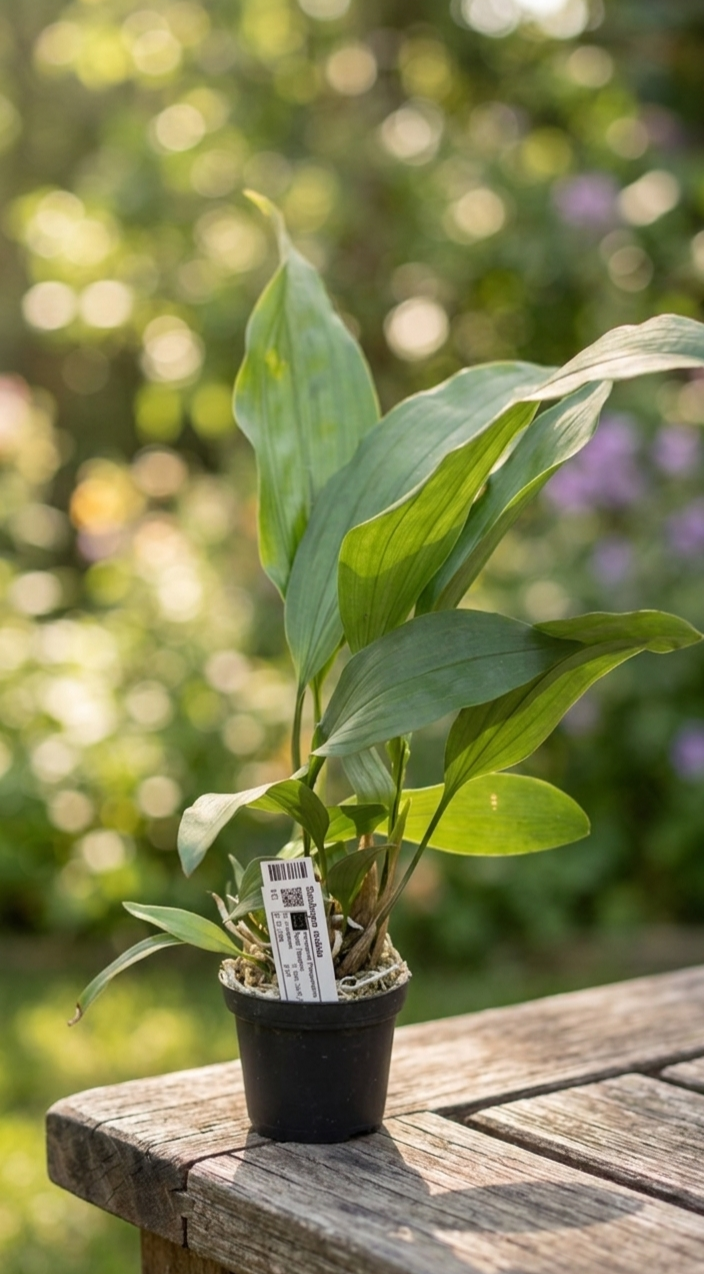
Epiphytic Growth Habit: 🌳 In nature, it inhabits the humid forests of Central and South America, growing on tree trunks. It develops oval, furrowed pseudobulbs, crowned by large, pleated, and leathery leaves.
🌱 Cultivation of Stanhopea oculata
The cultivation of this species requires a specific technique due to its peculiar way of blooming, but it rewards the grower with an unforgettable spectacle.
-
The Secret of the Perfect Pot: 🧺 Cultivate this plant exclusively in hanging wire baskets or wooden slat baskets lined with moss. Never use closed plastic or clay pots. In this way, the flower spikes can easily pass through the bottom openings to bloom.
-
Light: ☀️ Prefers partial shade or moderate indirect light. Avoid direct sun, as the pleated leaves are sensitive and burn easily. An environment under the canopy of trees or with 60% shade cloth is ideal.
-
Temperature: 🌡️ It adapts very well to intermediate to warm climates. It develops vigorously in temperatures between 18°C and 28°C, appreciating the constant humidity typical of tropical forests.
-
Humidity: 💧 High air humidity (between 60% and 80%) is vital. Since its pseudobulbs are prone to wrinkling if ambient humidity is lacking, spray the foliage on drier days.
-
Watering: 🚿 Water abundantly to keep the substrate always slightly damp, but without accumulating stagnant water. However, slightly reduce watering during the winter months when growth slows down.
-
Substrate: 🪴 Use a mix that retains ideal moisture without compacting. High-quality sphagnum moss combined with fine pine bark and charcoal works perfectly to line the basket.
✨ Additional Care
-
Ventilation: 🌬️ Constant air circulation is fundamental. Since the plant requires continuous moisture in the substrate, moving air prevents root rot and the appearance of fungal spots on the leaves.
-
Fertilization: 🧪 Fertilize bi-weekly during spring and summer with a well-diluted soluble balanced fertilizer. This ensures the necessary energy for the new shoots to generate strong spikes.
-
Short Cycle: ⏳ Be aware that the flowers last only a few days (usually 3 to 5 days). However, the intensity of the perfume and the exotic beauty make every second of the wait worthwhile.
With its fascinating floral architecture and magnetic fragrance, Stanhopea oculata will transform the ceiling of your orchid house into a true ceiling of suspended botanical jewels.





Reviews
There are no reviews yet